How Injuries Can Change the Outcome of a Football Match
Learn how injuries can change the outcome of a football match, affect team tactics, reduce squad strength, and influence better football predictions....
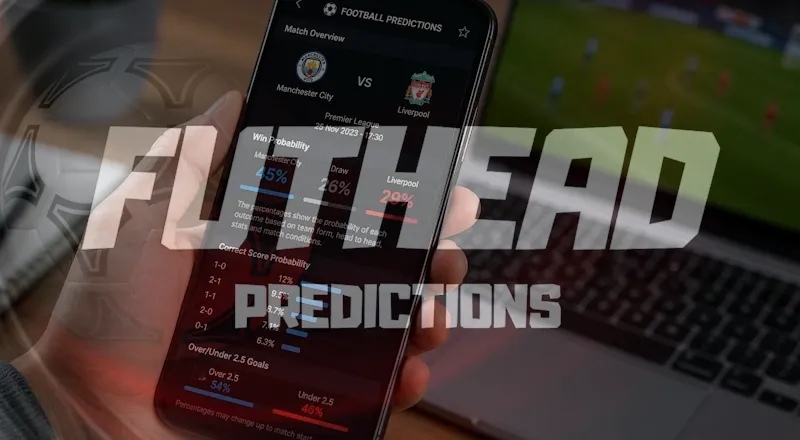
Football prediction percentages are useful because they make match analysis easier to understand. Instead of reading long statistics about team form, goals, injuries, home advantage, and recent results, you may see simple numbers such as 45 percent for a home win, 30 percent for a draw, and 25 percent for an away win.
These numbers can be helpful, but they can also be misunderstood. A prediction percentage does not mean a result is guaranteed. It only shows how likely one outcome may be compared with the other possible outcomes. To use football prediction percentages correctly, you need to understand what they really mean, what they do not mean, and how to compare them with odds, team news, and match context.
Football prediction percentages are probability estimates. They try to show the chance of a certain outcome happening in a football match. These outcomes may include home win, draw, away win, over 2.5 goals, under 2.5 goals, both teams to score, clean sheet, correct score, or other betting markets.
For example, if a prediction model gives a team a 60 percent chance of winning, it means that the team is considered more likely to win than not. However, it also means there is still a 40 percent chance that the team will not win. That 40 percent may include a draw or a defeat.
This is the first thing beginners need to understand. A high percentage does not remove risk. It only means the outcome is more likely than another outcome according to the data being used.
One of the biggest mistakes people make is treating high percentages as guarantees. If a prediction says 70 percent for a home win, some people think the home team will almost certainly win. That is not how probability works.
A 70 percent chance still leaves 30 percent for another result. In football, that is a big number. A red card, an early injury, a missed penalty, bad weather, a defensive mistake, or poor finishing can change the match completely.
This is why football is difficult to predict. Even when the stronger team has better form and better statistics, the match still has uncertainty. Prediction percentages should help you measure risk, not make you ignore it.
The most common prediction percentages are for the 1X2 market. This means home win, draw, and away win. These three percentages should usually add up to 100 percent.
For example, a match may have these predictions:
Home win: 50 percent
Draw: 28 percent
Away win: 22 percent
This means the home team is the most likely winner, but it does not mean the home team is guaranteed to win. In this example, the draw and away win together make 50 percent. So the home team has the same total probability as the two non-home-win outcomes combined.
This is important because many people only look at the highest number. A 50 percent home win prediction may look strong, but it still means the match is quite open. A much stronger prediction would be something like 68 percent home win, 20 percent draw, and 12 percent away win.
Prediction percentages become more useful when you compare them with betting odds. This helps you understand whether a selection may have value.
For example, imagine a prediction gives a team a 55 percent chance of winning. If the odds suggest that the team has only around a 45 percent chance, then the selection may be interesting. But if the odds are too low and suggest a much higher chance than the prediction, the value may not be there.
Beginners often choose the team with the highest percentage without looking at the price. This is not enough. A likely outcome is not always a good bet if the odds are too short. Good betting decisions are not only about finding what is likely to happen. They are also about understanding whether the odds are fair.
Probability and confidence are connected, but they are not exactly the same. A prediction percentage shows the chance of an outcome based on available information. Confidence is how strongly you trust that prediction after checking the context yourself.
For example, a model may show 62 percent for a home win. That looks strong. But if the home team is missing several key players, played a difficult match only a few days earlier, or has poor motivation, your confidence may be lower.
On the other hand, a 48 percent prediction may become more interesting if the team is in excellent form, plays at home, and faces an opponent with several defensive problems. The number gives you a starting point, but your final decision should include football logic.
Team form is one of the most important factors behind many football prediction percentages. Recent wins, draws, losses, goals scored, goals conceded, home form, and away form can all influence the numbers.
However, form needs context. A team may have won several matches against weak opponents, which can make its percentage look stronger than it should. Another team may have lost to top clubs but still be playing well. If you only follow the percentage, you may miss these details.
Before trusting a prediction percentage, check how both teams have performed recently. Look at whether they are scoring regularly, defending well, creating chances, and performing differently at home or away. This helps you decide whether the percentage makes sense.
Low percentages can sometimes be useful, but they should be treated carefully. If a team has only a 10 percent chance of winning, it means the result is unlikely. But unlikely does not mean impossible.
Football has many surprise results. Underdogs can win because of strong defending, counterattacks, set pieces, or mistakes from the favourite. That is why very low percentages should not be ignored completely, especially in leagues where matches are balanced.
Still, beginners should be careful with low-probability outcomes. High odds can be tempting, but they usually come with high risk. It is better to understand why the percentage is low before considering that type of selection.
Football prediction percentages are not fixed forever. They can change when new information appears. Team news, injuries, suspensions, weather, rotation, tactical changes, and market movement can all affect the final prediction.
A team may look like a strong favourite early in the week, but if the starting lineup is weaker than expected, the real chance of winning may drop. This is why it is useful to check predictions again closer to kick-off.
Late information is especially important in cup matches, European matches, and games with busy schedules. Coaches may rotate players, rest important names, or change tactics. A percentage based on old information may no longer be accurate.
Football prediction percentages are helpful, but they should not be the only thing you use. They are a guide, not a final answer. A good prediction process includes percentages, statistics, team form, injuries, motivation, head-to-head records, home advantage, and match importance.
If all of these factors support the same outcome, the prediction becomes stronger. If the percentage says one thing but the football context says another, you should be careful. Sometimes the best decision is to avoid the match completely.
There is no need to bet or predict every game. Waiting for clearer opportunities is often smarter than forcing a decision on a match with confusing signals.
Football prediction percentages are a useful way to understand the possible outcomes of a match. They help you see which result is more likely, compare different markets, and avoid relying only on emotion or team reputation.
However, percentages must be read correctly. A 60 percent chance is not a guarantee. A 40 percent chance is not impossible. The best way to use these numbers is to combine them with real football analysis and compare them with the odds available.
When you understand prediction percentages properly, you make smarter decisions. You stop seeing numbers as promises and start using them as tools. That is the right way to read football prediction percentages and build better football analysis over time.